Art
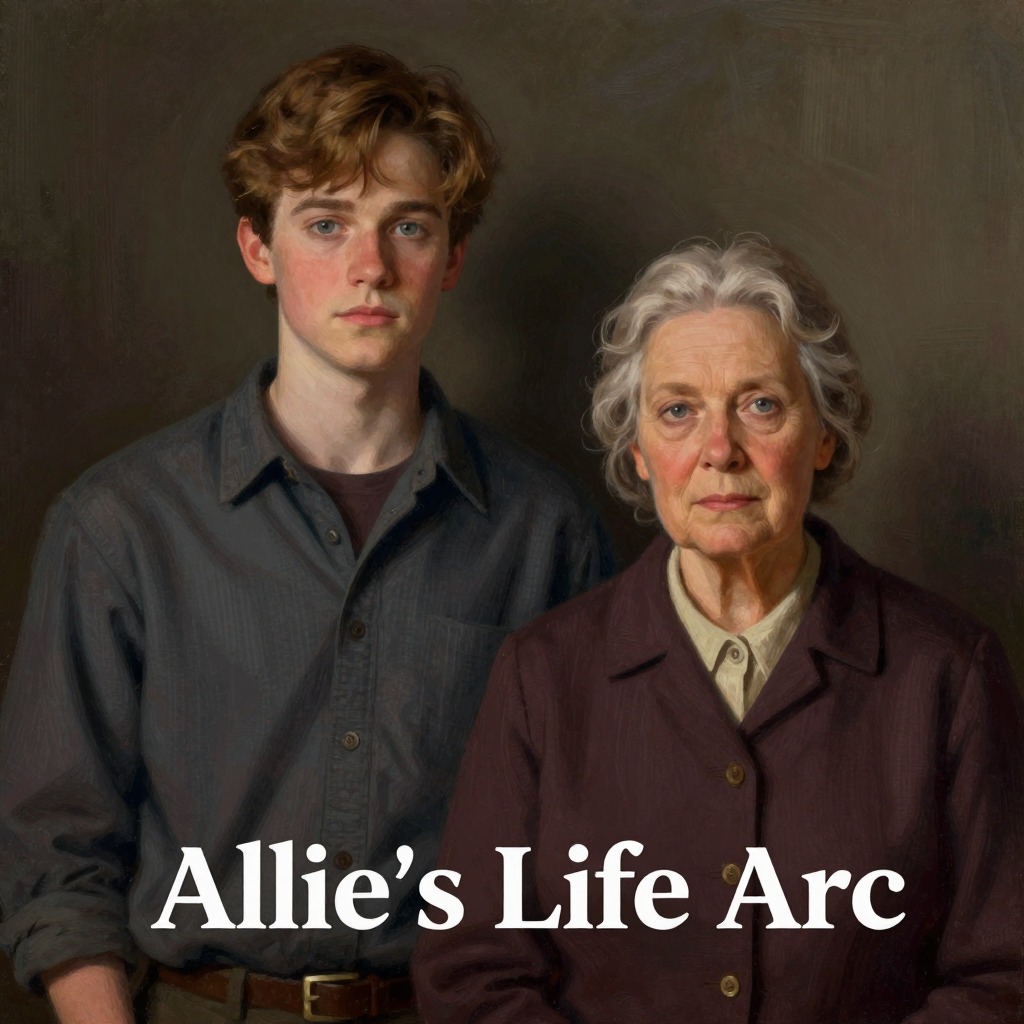
Art, specifically painting, functions as a vital thread in the fabric of The Notebook, embodying Allie Nelson's deepest self, the nature of her love for Noah Calhoun, and the legacy she leaves behind. The narrative traces her trajectory from a gifted young artist whose talent is suppressed by class expectations, through a long period of creative abandonment, to a celebrated career as one of the finest southern painters of the twentieth century. Her art is not merely a hobby but a language of the soul, a repository of memory, and a force that ultimately helps bridge the chasm created by Alzheimer's disease.
Identity and Suppression
Allie's artistic identity is established during the summer of 1932, when she gives Noah a painting she calls a picture of her dreams, a work he finds extremely sensual and keeps for the rest of his life. Her talent is a gift, and Noah recognizes it as such, seeing in her work a quality equal to paintings in New York museums. However, this gift is immediately placed in conflict with the rigid social expectations of her class. Her parents, who view status as more important than feelings, do not think it proper for someone of her standing to paint for a living. This disapproval, coupled with the pain of her separation from Noah, leads her to abandon her brushes entirely after college, despite a professor and art critic telling her she had a lot of talent and should try her luck as an artist. She stops painting for years, a decision that represents a profound suppression of her true self.
Reawakening and Validation
Noah is the catalyst for reawakening Allie's artistic spirit. When she visits him fourteen years later, he is stunned to learn she no longer paints. He insists her talent comes from her heart, not her fingers, and that it can never go away. His sincere belief in her ability is exactly what she needs to hear. The following morning, she visits an art gallery on Front Street and is drawn to a dynamic, dramatic painting that reminds her of her own work, leading her to buy paper, drawing chalk, and pencils. She begins sketching again, amazed at how easily it comes, as if she had never stopped. She creates a detailed portrait of Noah and a sketch of his house, a gift that demonstrates her skill has not diminished. This reawakening is a direct result of Noah's validation, which contrasts sharply with the dismissive attitude of her family and her fiancé, Lon Hammond Jr., who once looked at an abstract painting of hers and asked what it was supposed to be.
Legacy and the Final Paintings
Allie's decision to stay with Noah allows her art to flourish. She becomes one of the best southern painters of the twentieth century, with her paintings displayed in museums around the world. Noah keeps only two of her works for himself: the first one she ever gave him and the last one. These hang in his room at the Creekside Extended Care Facility, and late at night he sits and stares at them, sometimes crying. The paintings are not just decorations; they are a tangible connection to the woman he loves, a testament to a life fully lived. The first painting, created during their summer of love, hangs above his fireplace and makes him feel alive, its shapes, shadows, and colors so real he sometimes has to get up and touch it. The last painting, created at the end of her life, serves as a final, silent communication from her spirit.
Art as a Bridge Against Oblivion
In the final years of Allie's life, when Alzheimer's disease has stolen her memories, art remains a powerful, if fragile, bridge. On good days, when her memory is gone but her emotions are normal, she can still appreciate beauty. During one such afternoon, she and Noah watch a Caspian tern glide over Brices Creek, and she is taken in by the wonder of the birds. The narrative explicitly states that her paintings are in museums, but for Noah, the two he keeps are the most important. They are a heritage, a contribution to the world, and a source of pride. When Allie, in a moment of lucidity, asks Noah who he is, he tells her she is an artist who has touched a thousand souls. Her art, the product of her passion and talent, is the part of her that the disease cannot fully erase, a permanent record of the woman she was and the love she shared. It is, in the end, a miracle that proves the power of the human spirit to create beauty that outlasts memory itself.